

TL;DR
Employee labor laws affect routine decisions across hiring, timekeeping, payroll, management, and termination. A missed break, incorrect worker classification, outdated wage rate, or rushed dismissal may lead to back pay, taxes, penalties, or legal disputes. We recommend treating compliance as an ongoing operating system rather than an annual handbook update.
Table of Contents
- Employee labor laws: What employers actually need to manage
- Federal, state, local, and international rules: Which ones apply?
- What the Department of Labor enforces—and what other agencies handle
- Employee or independent contractor? The label does not decide
- Minimum wage, overtime, breaks, and compensable time
- Fair treatment, complaints, discipline, and termination
- Payroll taxes, wage statements, final pay, and required records
- Build a labor-law compliance system that payroll can execute
- FAQ
- Make employee labor laws operational
Employee labor laws: What employers actually need to manage

Employee labor laws govern areas such as wages, overtime, payroll, leave, discrimination, safety, organizing rights, benefits, records, discipline, and termination. The applicable obligations depend on factors including worker status, work location, employer size, industry, contracts, and the conduct involved.
For each worker, we recommend confirming the location and employing entity, classifying the role, identifying the governing rules, documenting the decision, and configuring payroll to match.
Why one nationwide policy can create risk
A nationwide policy may miss higher local wage rates, stricter break rules, paid-leave rights, pay-transparency requirements, or faster final-pay deadlines. A remote employee may be covered by the rules where they work rather than those at company headquarters.
We prefer a common company baseline supported by location-specific payroll settings and manager instructions. International requirements also demand local analysis. Our guide to minimum wage in Canada illustrates why a single country-level assumption may be inadequate.
Why an employee handbook is not a compliance system
A handbook explains policy. It does not show that schedules, payroll calculations, time records, and management decisions followed that policy.
A practical system connects:
- Current written policies
- Payroll and timekeeping controls
- Manager instructions
- Employee notices and acknowledgments
- Retrievable records
For example, a break policy offers little protection if managers interrupt breaks or payroll automatically deducts time that employees worked.
Federal, state, local, and international rules: Which ones apply?
Federal law often provides a baseline, while state and local laws may add protections. Coverage thresholds, exemptions, preemption rules, and statutory conflicts can affect which requirement controls.
The employee’s actual work location is a key compliance input, particularly for remote, mobile, and client-site workers. Headquarters alone rarely provides the full answer.
International hiring may involve local registration, withholding, benefits, contracts, data requirements, and termination procedures. An Employer of Record may offer a lawful employment structure where a business lacks a local entity, depending on the country and role.
A jurisdiction checklist for every hire
Before onboarding, capture:
- Home address and regular worksite
- Temporary and client worksites
- Employing legal entity
- Duties and reporting structure
- Pay method and schedule
- Expected travel or remote work
- Contractual or collective terms
Recheck this information after relocations, assignment changes, or moves between employing entities.
When laws appear to conflict
Compare each rule’s coverage, definitions, exemptions, and enforcement scope. Several laws may apply at once, with one governing wages and another governing paid leave.
We recommend referring genuine conflicts, uncertain exemptions, tax-residency issues, and cross-border arrangements to qualified counsel. Payroll teams should not have to resolve unsettled legal questions through software settings.
What the Department of Labor enforces—and what other agencies handle
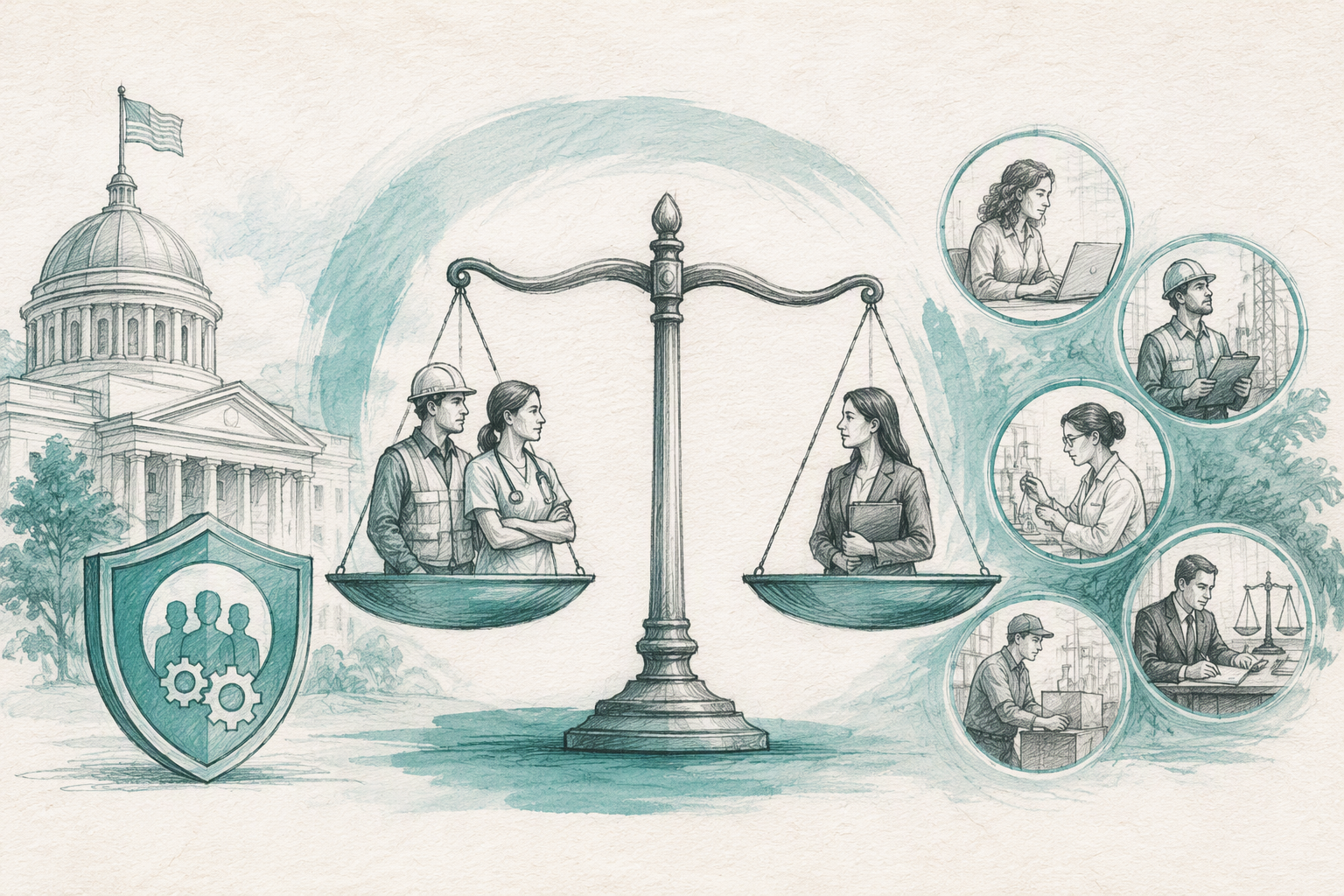
The U.S. Department of Labor administers many federal requirements involving wages, overtime, protected leave, benefits, and worker protections. OSHA addresses federal workplace safety, while the Employee Benefits Security Administration oversees many private-sector benefit-plan obligations.
Other agencies handle tax classification, discrimination, organizing rights, and state or local employment rules. The correct agency depends on the issue and jurisdiction.
Which agency handles common employee complaints?
Common routes include:
- Federal minimum wage and overtime: Wage and Hour Division
- Workplace safety: OSHA or an approved state program
- Discrimination and harassment: EEOC or a state counterpart
- Federal tax classification: IRS
- Protected concerted activity and organizing: NLRB
- State wages, leave, and final pay: State labor department
- Local wage ordinances: Relevant city or county office
What an investigation may require
Employers may be asked for payroll registers, time records, wage statements, schedules, notices, policies, classification reviews, and manager communications. We recommend keeping evidence searchable by worker, work location, pay period, and issue.
Employee or independent contractor? The label does not decide
A contract describing someone as an independent contractor does not settle their legal status. Agencies and courts may examine control, economic dependence, permanence, investment, business risk, skill, initiative, and whether the work forms part of the company’s operations.
Tests can differ across wage, tax, unemployment, workers’ compensation, and state laws. Misclassification may create exposure involving wages, overtime, taxes, benefits, interest, or penalties. Country-level approaches also vary, as our guides to IR35 and contractor status in the United Kingdom and contractor-versus-employee status in Colombia explain.
A pre-onboarding classification review
Document who:
- Sets schedules and rates
- Provides tools and systems
- Supervises the work
- Bears business risk
- Owns the customer relationship
- Can hire assistants
- Controls how work is completed
Review the actual role in its jurisdiction rather than relying on a standard agreement.
High-risk patterns for startups and staffing firms
Indefinite engagements, exclusive relationships, company-controlled schedules, close supervision, and core operational work may increase classification risk.
Staffing firms should also assess joint-employment issues when both the firm and client influence schedules, supervision, discipline, pay, or working conditions.
Minimum wage, overtime, breaks, and compensable time
The federal minimum wage may not be the applicable rate. State, county, city, industry, employer-size, and tipped-worker rules can impose different requirements.
Overtime exemptions depend on the governing salary and duties tests, not titles alone. Compensable time may include required pre-shift tasks, interrupted breaks, travel between worksites, training, on-call duties, and after-hours work.
How to determine the correct minimum wage
For each work location, check:
- Federal, state, county, and city rules
- Industry requirements
- Employer-size provisions
- Tipped-worker rules
- Permitted youth or training rates
- Effective dates
Record the official source, applicable rate, location, effective date, and review date. Commissions, bonuses, tips, deductions, and multiple rates may also affect payroll calculations.
Timekeeping rules managers commonly break
Managers should not request off-the-clock work or allow employees to work through unpaid breaks without recording the time. Create a correction process so missed time can be reported and paid.
Employers may enforce neutral timekeeping procedures, but accurate reporting should not trigger retaliation.
Exempt status requires more than a salary
Confirm the applicable salary threshold, salary-basis rule, and duties test. Reassess classifications after changes to compensation, duties, reporting lines, or governing law. Payroll software cannot correct a faulty legal classification.
Fair treatment, complaints, discipline, and termination
Unfair treatment becomes a legal concern when tied to discrimination, retaliation, protected leave or activity, wage rights, accommodations, contracts, or another protected ground.
At-will employment does not allow termination for an unlawful reason. Discipline should document expectations, evidence, the employee’s response, comparable cases, and next steps. Consistency is particularly important in sensitive situations such as nepotism in the workplace.
A safer pre-termination review
Before approval, check:
- Recent wage or safety complaints
- Leave and accommodation requests
- Workplace injuries
- Other protected activity
- Comparable cases
- Performance records
- Contractual requirements
- Final-pay timing
Close timing between a protected complaint and termination may contribute to a retaliation claim, even when performance concerns also exist.
Layoffs and reductions in force
Review selection criteria for potential discrimination, retaliation, contractual restrictions, and applicable notice laws. Use documented business criteria rather than manager preference.
Coordinate termination dates, access changes, benefits notices, severance documents, and payroll before announcing the decision.
Payroll taxes, wage statements, final pay, and required records
A new work jurisdiction may trigger registration, withholding, unemployment insurance, workers’ compensation, local taxes, notices, and wage-statement requirements. We recommend completing setup before the first payroll.
Final-pay rules vary by location and separation type. Accrued vacation or paid leave may also require payment under local law or company policy.
The core payroll and employment record set
Maintain records covering:
- Worker identity and location
- Tax and registration forms
- Time and break records
- Pay rates and changes
- Payroll registers and wage statements
- Deductions and reimbursements
- Leave documentation
- Classification reviews
- Discipline and termination
Retention requirements differ by record and jurisdiction, so a single universal retention period is rarely suitable.
A final-pay checklist
Confirm the jurisdiction, separation type, final workday, outstanding time, commissions, expenses, deductions, leave payout, and delivery method. Calculate the deadline before the termination meeting whenever possible.
Build a labor-law compliance system that payroll can execute
Translate legal requirements into workflows, payroll fields, approval rules, manager instructions, and audit reports. A jurisdiction matrix can track wages, overtime, breaks, leave, notices, wage statements, final pay, and record retention.
At Shorpay, we approach international payroll as jurisdiction-aware infrastructure. Accurate calculations depend on reliable information about worker status, location, compensation, working time, and employment structure.
Manager controls matter as much as payroll settings
Give managers clear escalation rules for location changes, missed breaks, complaints, leave requests, time edits, discipline, and termination. They should not improvise legal or payroll decisions through chat messages.
A recurring compliance cadence
Review legal changes before their effective dates, reconcile timekeeping with payroll each pay period, and audit higher-risk roles and locations regularly. Repeated corrections can signal a broken process rather than isolated mistakes.
Questions to answer before entering a new jurisdiction
Determine whether the company must register, establish an entity, use another employment structure, withhold tax, provide statutory benefits, issue a local contract, or follow specific termination procedures.
Make employee labor laws operational
Map every worker to the correct location, classification, wage rules, registrations, and termination requirements. Talk to Shorpay to build international payroll operations around the jurisdictions where your team actually works.
FAQ
What is unfair treatment by an employer?
Unfair treatment may include inconsistent, harsh, or unequal conduct. It may be unlawful when linked to a protected characteristic, retaliation, wage complaints, leave, accommodations, organizing activity, or contractual rights.
What does the Department of Labor do?
The U.S. Department of Labor administers and enforces many federal rules involving wages, overtime, protected leave, workplace safety, benefits, and worker protections. Other agencies handle issues such as tax classification, discrimination, and organizing rights.
What is the minimum wage in California?
California employers should check the current statewide rate and any applicable local or industry requirement for the employee’s work location. Official state and local sources are more reliable than a static figure.
What is the number-one reason employees get fired?
There is no universal leading reason. Performance, attendance, misconduct, policy violations, and restructuring are common categories. Employers should document the reason and review consistency, protected activity, contractual restrictions, and final-pay obligations.